
These Olive Oil Scones are made with extra virgin olive oil, creating irresistibly tender, moist scones that do not use any butter, are ready in 20 minutes, and are drizzled with an optional sweet lemon glaze.
They are super simple, avoiding complicated steps like grating butter or freezing the dough before baking. Just combine the ingredients, divide into slices, and bake.

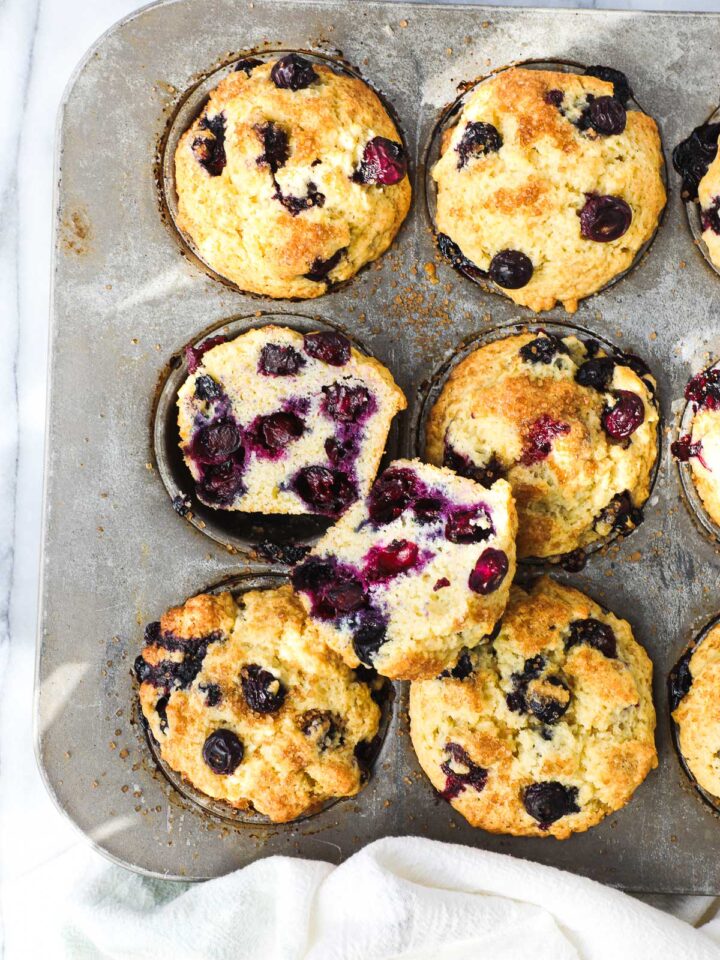
Extra virgin olive oil has antioxidants, heart-healthy fats, and anti-inflammatory properties, and it adds flavor and moisture. I’ve used extra virgin olive oil in all sorts of baked goods, such as Olive Oil Blueberry Muffins, Olive Oil Banana Bread, Olive Oil Carrot Cake, Lemon Olive Oil Loaf, and even in crackers like these Einkorn Crackers.
Scones, however, are trickier than cakes and quick breads to bake with olive oil because they typically use cold, sometimes frozen butter cut into small pieces or grated. As the cold butter heats up in the oven, it creates steam, which creates a lighter texture in the finished good.
Although I’ve developed several scone recipes, I tested this recipe three times to ensure that it had the right proportion of wet to dry ingredients and the optimal baking time, compensating for the difference between olive oil and butter.
Olive Oil vs. Butter in Scones
- Olive Oil:
- Very moist (not dry)
- Easy and quick prep
- No grating butter or freezing before baking
- Butter
- Flakier (cold butter creates steam in the oven creating a flaky texture)
- More time intensive (longer to prep)
- Requires cold butter, grated or diced small. Often calls for freezing the scones before baking.
Tips for Baking With Olive Oil
- Substitute for Butter: Olive Oil is pure fat and can be used as a substitute for butter in many baking recipes. However, because butter is not pure fat (it contains water and milk solids), the two cannot be substituted one for one.
- Flavor of the Olive Oil: The flavor of the olive oil will transfer to the flavor of baked goods. Use a good quality extra virgin olive oil when baking, but not necessarily a high-end one that you’d use for dipping bread.
- Herby/Floral: If you like a strong herby or floral note in your baked good, use an olive oil that has those flavors.
- Neutral: Use a neutral-tasting extra virgin olive oil that does not impart a strong taste in the finished pastry or cake. It’s a great choice if you want to add flavor, but you still want to steer clear of butter or vegetable oil.
Variations
- Blueberry Scones: Use fresh blueberries and optionally lavender extract (skip the lavender extract if you like) in these butter based Lavender Blueberry Scones.
- Sourdough Scones: If you maintain a sourdough starter try Strawberry Sourdough Scones, Sourdough Discard Pumpkin Scones, or Sourdough Blueberry Scones.
- Orange or Grapefruit: Switch out the lemon zest and glaze for orange or grapefruit (similar flavor profile as this Grapefruit Olive Oil Cake).
Ingredients
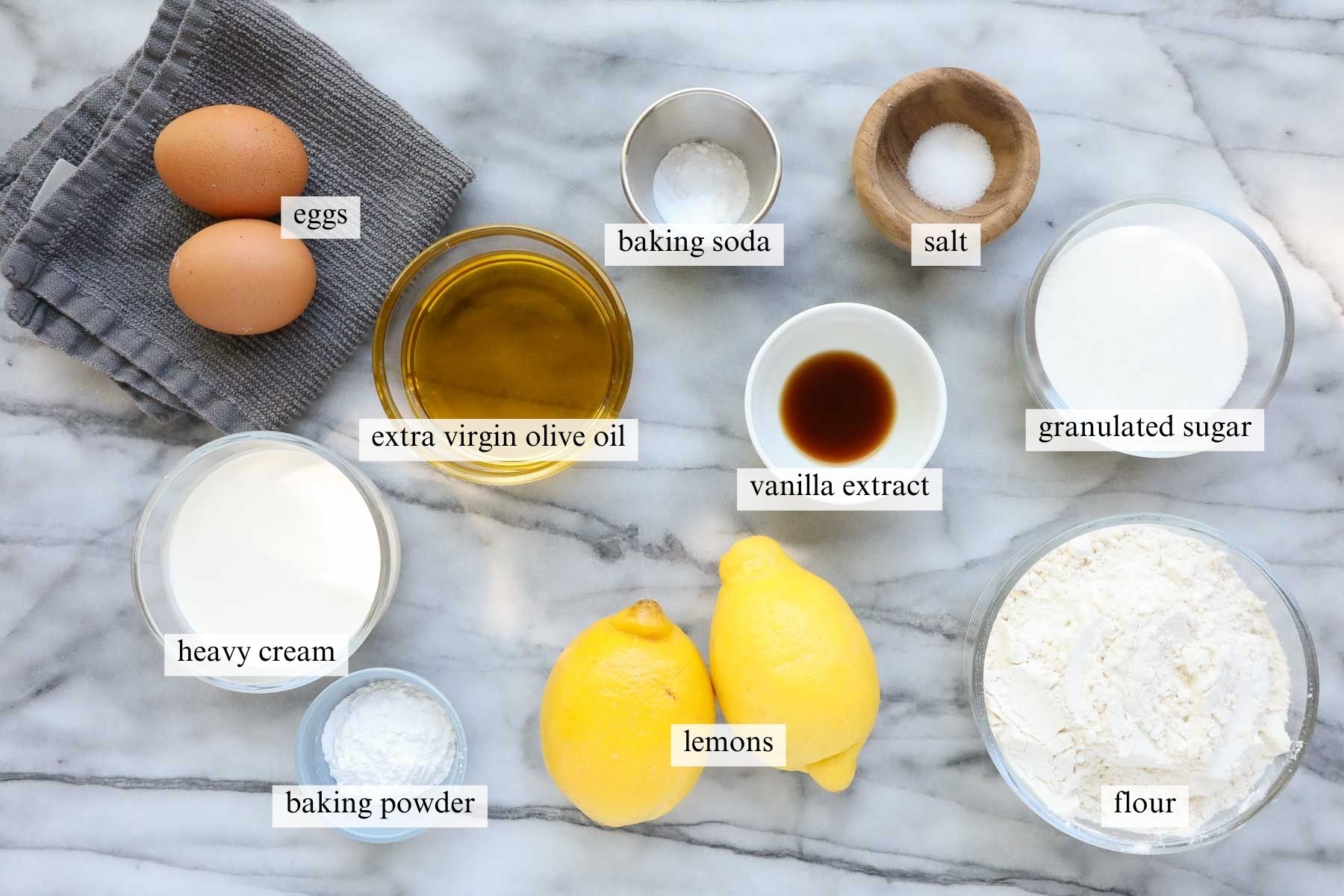
Below are the ingredients needed to make Olive Oil Scones with Lemon Glaze.
Olive Oil Scones
- Heavy Cream: Use heavy whipping cream.
- Extra Virgin Olive Oil: Use a neutral-tasting extra virgin olive oil or one that has herby and floral notes that you already know that you enjoy. Olive oil pairs really well with lemon (used in this recipe) as well as in this Italian Olive Oil Cake.
- Eggs: I use both a whole egg and an extra egg yolk to add extra richness.
- Vanilla Extract: Use real vanilla extract, not imitation vanilla.
- Lemon Zest: Lemon zest adds all of the flavor and sweetness of lemons without any of the sourness or acidity in lemon juice. Zest the outermost bright yellow pith only. Lemon pairs really well with olive oil, but it can be omitted from the recipe if desired.
- Flour: Use all-purpose, unbleached flour.
- Baking Powder: The primary leavener in this recipe.
- Baking Soda: Aids in leavening but also helps with browning.
- Salt: Brings out and balances flavor.
Lemon Glaze (optional)
- Lemon Juice: Use the juice from the lemon used for the lemon zest above.
- Powdered Sugar: Also known as confectioner’s sugar, it creates the perfect consistency for a glaze.
See the recipe card below for full information on ingredients and quantities.
How to Make Olive Oil Scones (without butter)
Below are the step-by-step instructions and photos for how to make Olive Oil Scones.
Note: The recipe card with instructions, ingredient list, and quantities is included further below these step-by-step photos.
Prep: Preheat the oven to 400°F.
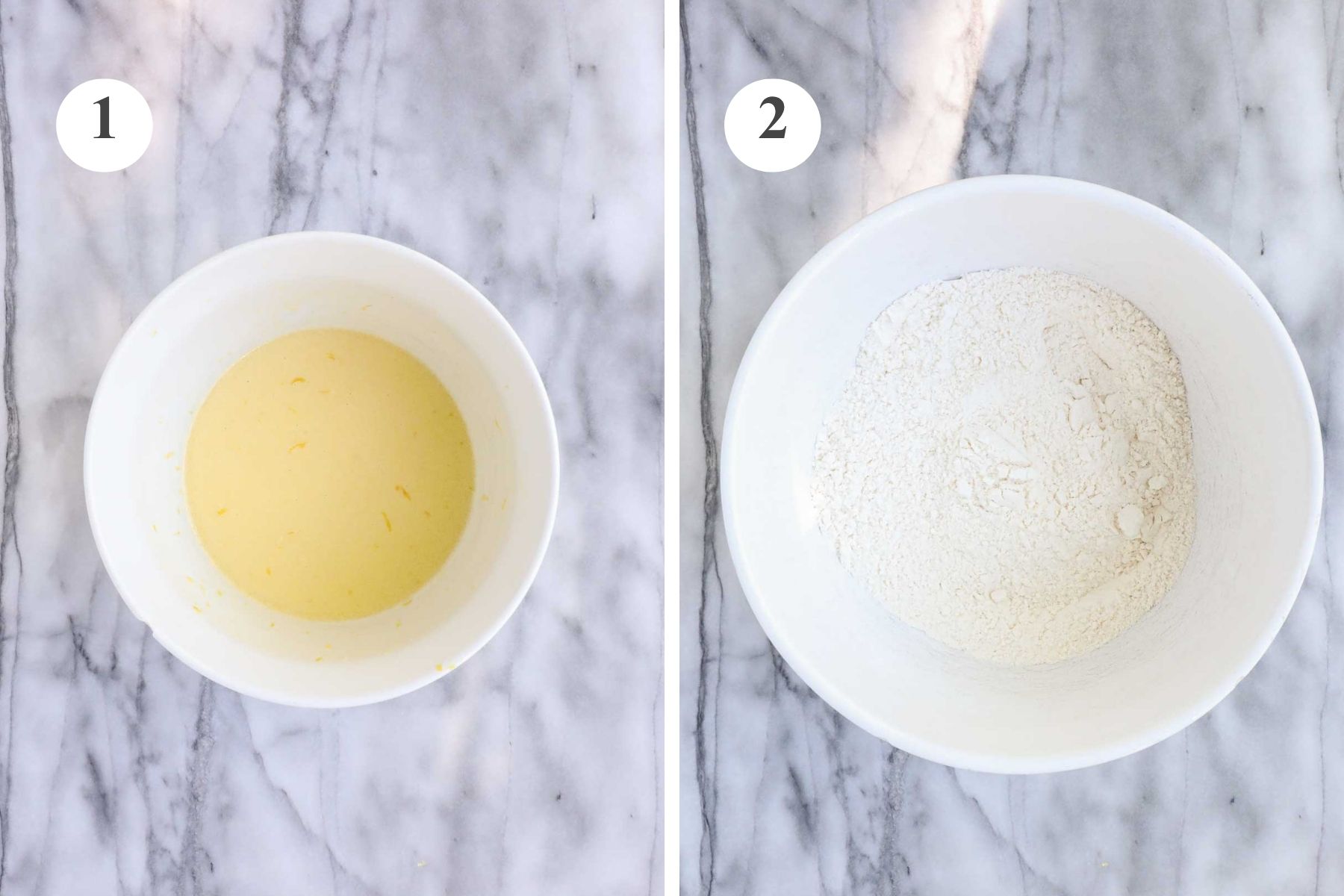
Step 1. Wet Ingredients: In a medium bowl, whisk the heavy cream, extra virgin olive oil, egg, egg yolk, vanilla extract, and lemon zest.
Tip: Reserve the extra egg white for brushing on the scones before baking.
Step 2. Dry Ingredients: In a large bowl combine the all-purpose flour, granulated sugar, baking powder, baking soda, and salt.
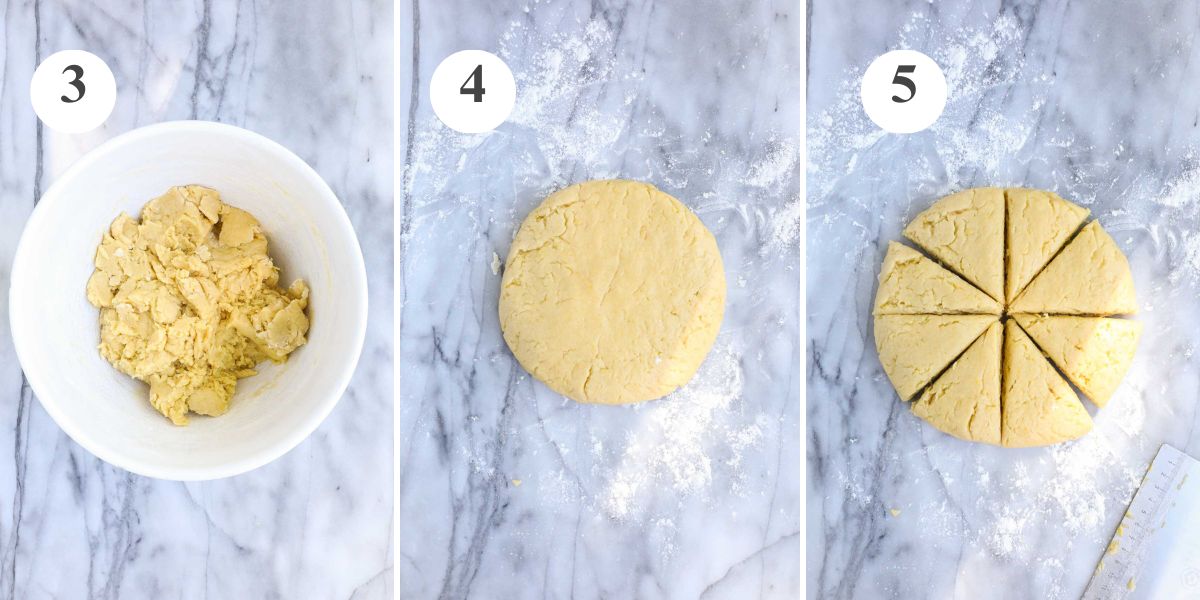
Step 3. Combine Wet and Dry Ingredients: Add the whisked heavy cream and olive oil mixture to the bowl with the dry ingredients and use a large spoon or spatula to mix until just combined.
Step 4. Press into a Disc: Turn the dough out onto a generously floured work surface. Shape the dough into a round disc that is roughly 6½ inches in diameter. Use additional flour as needed. The dough should feel soft and slightly greasy from the olive oil, but not sticky.
Step 5. Divide: Use a butter knife or bench scraper to divide the dough into 8 wedges.
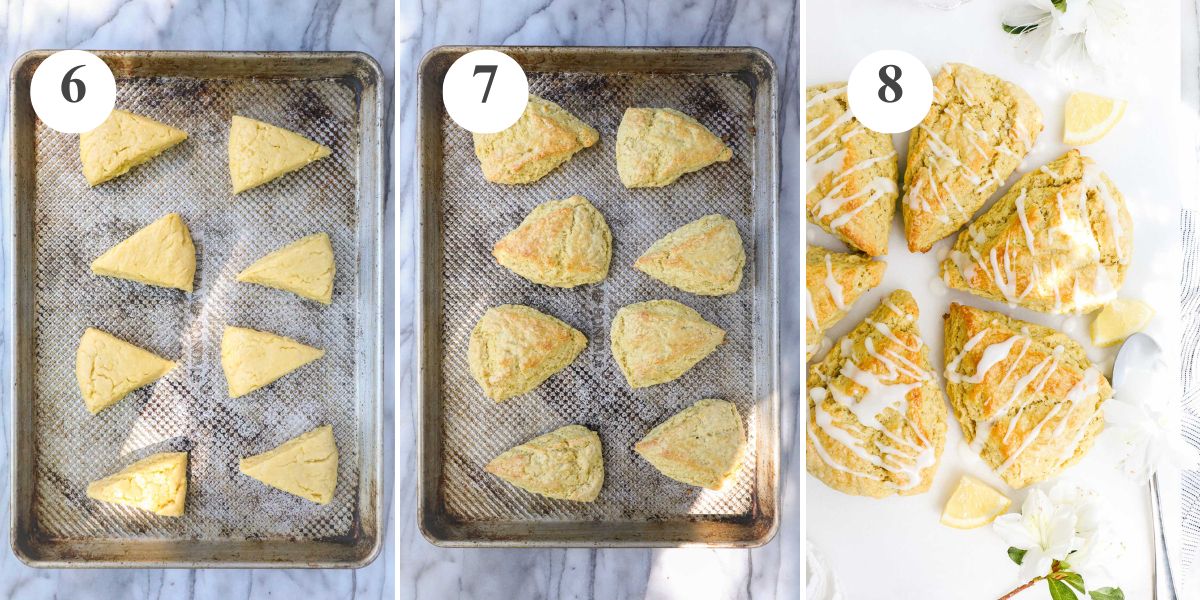
Step 6. Brush with Egg White: Place the scones evenly distributed on a baking sheet. Brush the scones with the reserved egg white.
Tip: Brushing the scones with an egg white before baking gives them a shiny appearance when fully baked.
Step 7. Bake: Bake the scones at 400°F for 10-11 minutes. Watch the scones carefully. Even a minute too long can lead to dry scones. Every oven is different. Look for the scones to have a light golden brown color in some places but not all over.
Step 8. Lemon Glaze (optional): While the scones are in the oven, make the lemon glaze. Combine the lemon juice (use an already zested lemon from earlier) and powdered sugar. Adjust as needed adding more juice if it's too thick or more powdered sugar if it's too thin.
Once the scones have cooled, drizzle with the glaze. I like to do this with a spoon for a more rustic imperfect look. If you add the glaze before the scones have cooled, the glaze will melt on the warm scones.
How to Store, Freeze, and Reheat
To Store: Store the scones in an airtight container at room temperature for up to 3 days. They are best freshly made, but they are still great on day 2 and 3.
To Freeze: These scones freeze and reheat very well. Store in an airtight container or gallon sized freezer bag for up to 3 months.
To Reheat: Thaw overnight in the fridge or at room temperature. Or, microwave on low power for 30 seconds at a time until warm. These can also be toasted in the oven at 350°F for 6-8 minutes. If reheating in the oven, I'd recommend slicing them and slathering them with butter.
Tips for Baking the Best Scones
- Heavy Cream: Use heavy cream rather than buttermilk (I've tried both). Heavy cream has a higher fat content and creates scones with a crispy exterior and a light and fluffy interior.
- Extra Egg Yolk: Adding an extra egg yolk adds extra flavor.
- Measuring Flour: This one is perhaps the most important. I use a conversion of 140g per 1 cup of flour (there is no universal measurement, some bakers use 120g, some use up to 150g). For best results, measure the flour in grams with a kitchen scale. If you do not have a kitchen scale, use America’s Test Kitchen approach of “dip and sweep”.
- Lemon: While the lemon zest and lemon glaze are optional, lemon pairs really well with olive oil. The lemon takes these scones up several notches.
- Don't Overmix: Mixing leads to gluten development, which is great when making pizza (think a chewy crust), but creates tough rather than light and tender scones.
- Brush with Egg White: For that shiny professional bakery look, brush the scones with the reserved egg white before baking.
- Watch the Baking Time: Even a minute too long and the scones can get dry. These scones have a very short baking time, so watch them closely in the oven. Look for the tops of the scones to have a light golden brown color in some places, but not all over.
For More Olive Oil Recipes You May Love:


If you've tried these Olive Oil Scones with Lemon Glaze or any other recipe on my site, please leave a 🌟 star rating and let me know how it went in the 📝 comments below. I'd love to hear from you!

Olive Oil Scones (No Butter, Ready in 20 Minutes)
Ingredients
Olive Oil Scones
- ½ cup heavy cream 113g
- ½ cup extra virgin olive oil 100g
- 1 large egg
- 1 large egg yolk reserve the egg white for brushing
- 1 teaspoon vanilla extract
- zest of 2 large lemons optional, but helpful
- 2¼ cups all-purpose flour 315g
- ½ cup granulated sugar 100g
- 1 tablespoon baking powder 15g
- ½ teaspoon baking soda
- ½ teaspoon salt
Lemon Glaze (optional)
- 2 tablespoon lemon juice
- 1 cup powdered sugar
Instructions
- Preheat the oven to 400°F.
- In a medium bowl, whisk the heavy cream, extra virgin olive oil, egg, egg yolk (reserve the egg white), vanilla extract, and lemon zest (if using).
- In a large bowl, combine the all-purpose flour, sugar, baking powder, baking soda, and salt.
- Add the wet ingredients to the bowl with the dry ingredients, and use a large spoon or spatula to gently combine until the dry ingredients are just incorporated.
- Turn the dough out onto a generously floured work surface. Shape the dough into a round disc that is 6-7 inches in diameter. Add flour if needed when shaping the dough. Use a butter knife or bench scraper to divide the dough into 8 wedges.
- Place the scones on a baking sheet, evenly spaced out. Use a pastry brush to brush the scones with the reserved egg white.
- Bake the scones at 400°F for 10-11 minutes. The tops should have lightly browned in places, and a toothpick inserted in the middle comes out clean.
- While the scones are baking, make the lemon glaze (if using). Combine the lemon juice and powdered sugar in a medium bowl. Add additional powdered sugar or lemon juice as needed to get the right consistency. Let the scones cool before drizzling with the glaze.
Notes
- Heavy Cream: Use heavy cream rather than buttermilk (I've tried both). Heavy cream has a higher fat content and creates scones with a crispy exterior and a light and fluffy interior.
- Extra Egg Yolk: Adding an extra egg yolk adds extra flavor.
- Measuring Flour: This one is perhaps the most important. I use a conversion of 140g per 1 cup of flour (there is no universal measurement, some bakers use 120g, some use up to 150g). For best results, measure the flour in grams with a kitchen scale. If you do not have a kitchen scale, use America’s Test Kitchen approach of “dip and sweep”.
- Lemon: While the lemon zest and lemon glaze are optional, lemon pairs really well with olive oil. The lemon takes these scones up several notches.
- Don't Overmix: Mixing leads to gluten development, which is great when making pizza (think a chewy crust), but creates tough rather than light and tender scones.
- Brush with Egg White: For that shiny professional bakery look, brush the scones with the reserved egg white before baking.
- Watch the Baking Time: Even a minute too long and the scones can get dry. These scones have a very short baking time, so watch them closely in the oven. Look for the tops of the scones to have a light golden brown color in some places, but not all over.
Eva Skardal says
I was lucky to be at Lauren’s home when she baked these delicious scones. They were very light and fluffy. The lemon glaze gave them a fresh taste without being too sweet. The best scones I have ever had!
Lauren says
I'm so glad that you loved them!