
This Crispy Sheet Pan Focaccia with Rosemary is made in a large half sheet pan, crispy on the bottom, soft and salty on the top, baked in olive oil, and sprinkled with buttery rosemary. You can make this as a side, a snack, as sandwich bread, or eat it alongside a huge salad for dinner.

This is a great recipe to make for kids. It can be served just like a pizza but without sauce, which might appeal to some picky eaters. We love to make it when having friends over, along with this Grandma Pie Pizza (a sheet pan pizza), or we use this Poolish Pizza Dough Recipe to make Potato and Rosemary Pizza and Broccolini Pizza.
Focaccia can also be made in a cast iron pan, like this Cast Iron Focaccia with Rosemary and Sea Salt or a 9x13 pan, like this Bubbly Focaccia, or for a smaller portion, this Loaf Pan Focaccia.
💡 Recipe Inspiration
Rosemary, which is sprinkled on the top of this focaccia, is an herb that I first realized that I loved when visiting Girona, a small inland town towards the northeastern coast of Spain, not too far from Barcelona. We visited Girona when we lived in Spain for two years back in 2013.
While walking around the town feeling hungry, we kept seeing people walking through town with pizza in their hands. We followed them to a cafe-style pizza place that specialized in Roman-style pizza. The Roman-style pizza had thinly sliced potatoes and fresh rosemary, and it was incredible. We found some steps nearby and enjoyed every little bite along with a Coke. This was at the time when Coca-Cola did a campaign with a name on each Coke can. I got “Mama”.


This focaccia is inspired by that rosemary pizza in Girona, the Ligurian Focaccia from Salt Fat Acid Heat on Netflix, and our most-loved Grandma Pie pizza.
🛒 Crispy Sheet Pan Focaccia Ingredients
Below are the ingredients needed to make this Crispy Sheet Pan Focaccia.
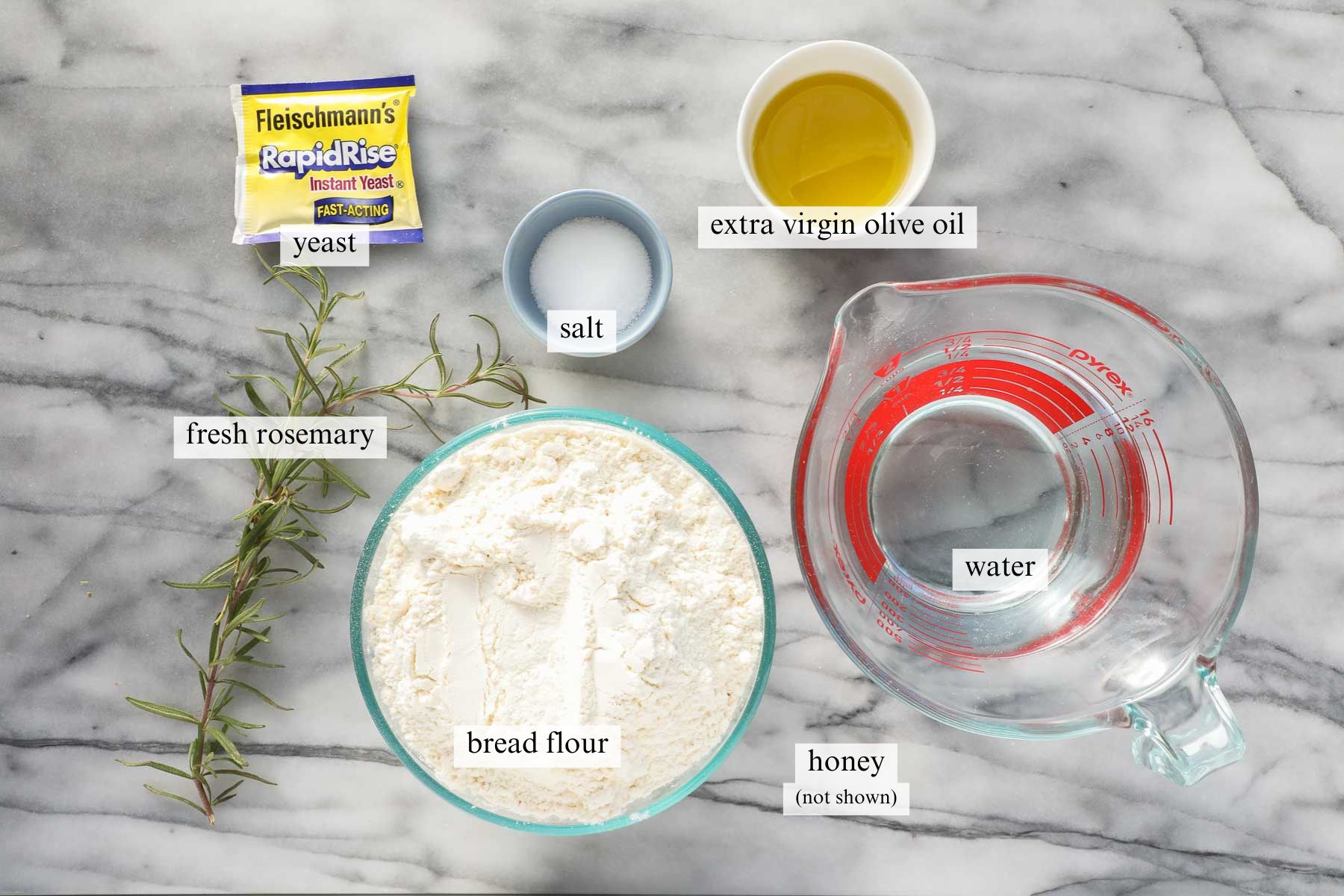
- Water: Use warm, but not hot water, to ensure activation of the yeast.
- Honey: Helps to activate the yeast quickly.
- Olive Oil: Use extra virgin olive oil.
- Yeast: Use 1 package of instant yeast.
- Salt: Balances and brings out flavor.
- Flour: Use bread flour if possible, otherwise all-purpose flour will work.
- Rosemary: Use fresh rosemary, the fresher the better. The fresher it is the more, soft, buttery, and fragrant it is. Consider planting it in your garden if you keep one.
See the recipe card further below for full information on ingredients and quantities.
📝 How to Make Crispy Sheet Pan Focaccia with Rosemary
Below are the step-by-step instructions and photos for how to make Sheet Pan Focaccia.
Note: The recipe card with instructions, ingredient list, and quantities is included further below these step-by-step photos.
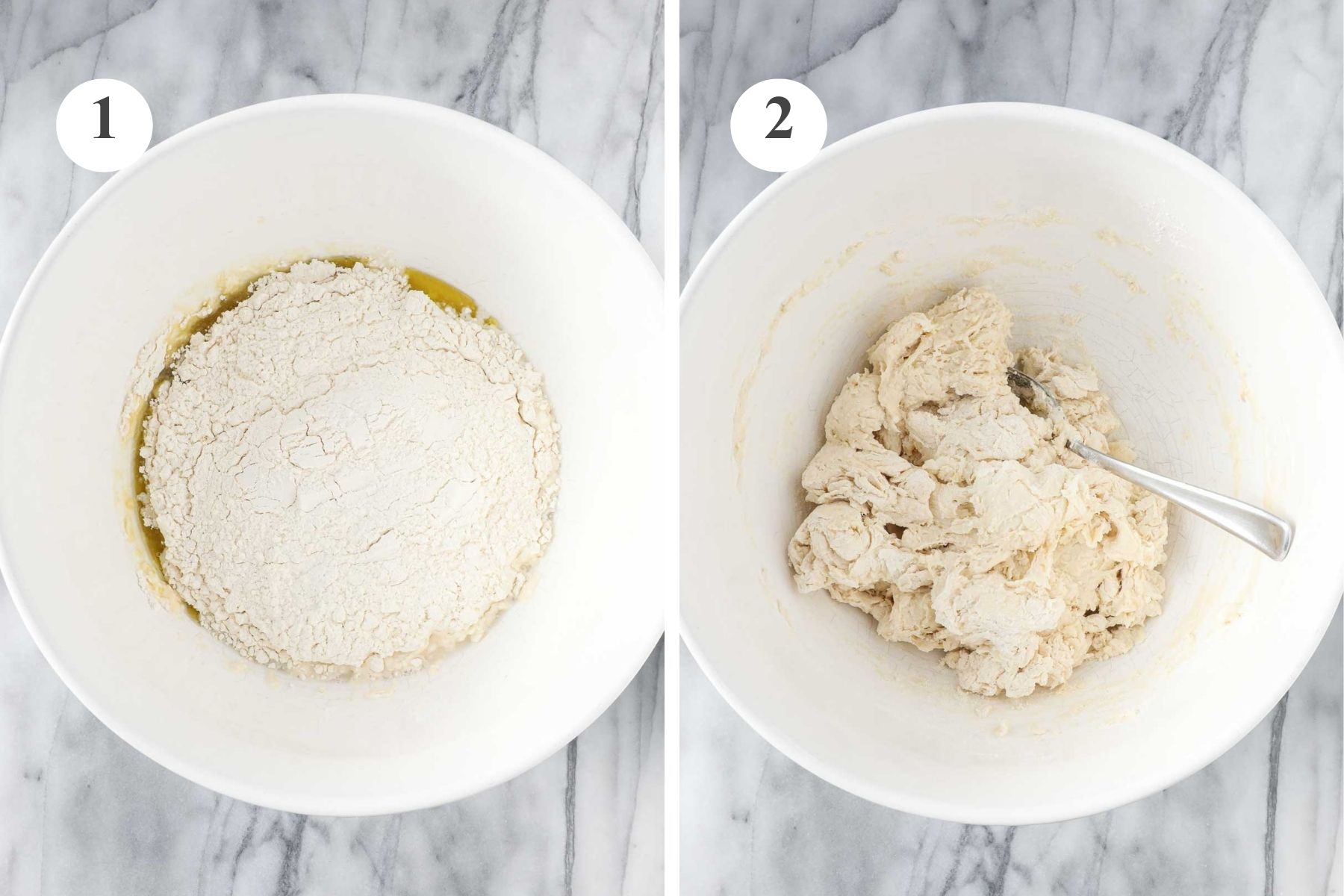
Step 1. Start the Dough: In a large bowl, add warm water and honey and stir to dissolve. Ensure the water is warm, but not hot, then add the yeast and let sit for 5-10 minutes to activate. Add the olive oil, salt, and bread flour.
Tip: Adding yeast to hot water will deactivate the yeast and prevent the dough from rising.
If the yeast does not become bubbly in the water after 5-10 minutes, the yeast will not help the dough rise, and you'll need to start over with fresh yeast.
Step 2. Rough Mix: Use a spoon to roughly stir the ingredients together.
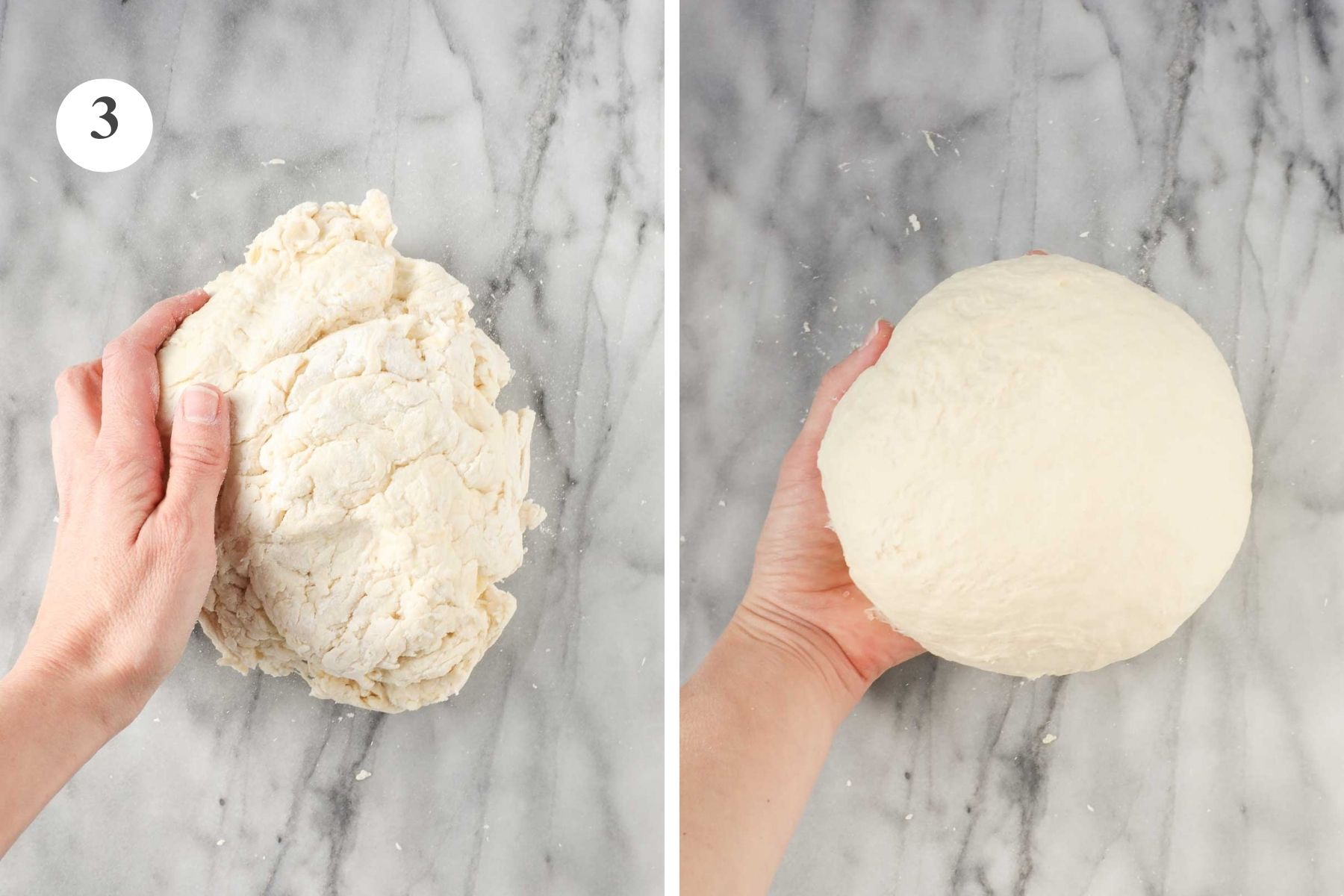
Step 3. Knead the Dough: Turn the dough out onto a clean work surface and knead for 10 minutes, flouring the surface lightly if needed. Do not add too much flour. The dough may be slightly tacky. Shape the dough into a smooth round ball.
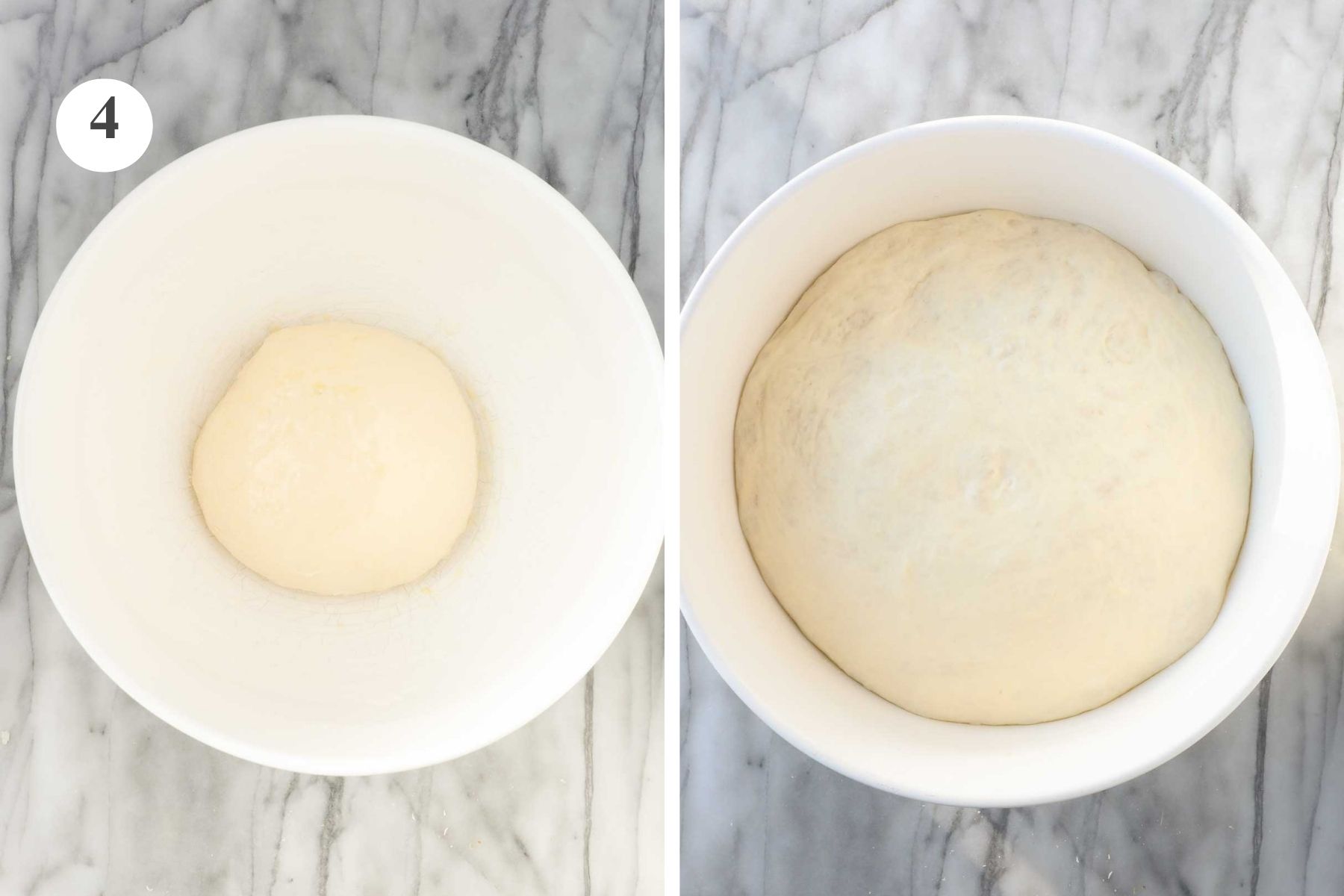
Step 4. First Rise: Place the dough in a large clean bowl. Cover lightly with olive oil, then cover the bowl with plastic wrap. Place in the fridge to rise overnight or in a warm location for 1-2 hours or until doubled in size.
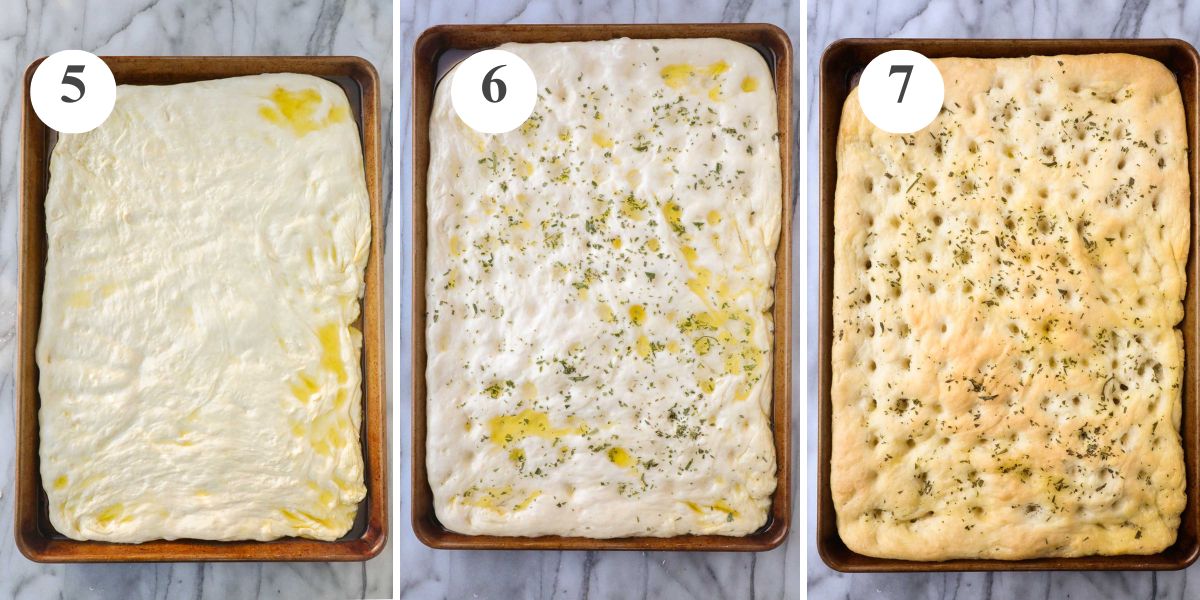
Step 5. Spread Out on a Sheet Pan: Once the dough has doubled in size, punch down the dough. Add ½ cup olive oil to the bottom of the sheet pan. Add the dough to the sheet pan and use your hands to stretch the dough to the edges of the pan. This may take some time as the dough naturally pulls back to the center. However, as the gluten relaxes the dough will become easier to stretch. Your hands will get covered in olive oil.
Cover in plastic wrap, and place in warm location for 40 minutes to 1 hour, until the dough has risen to roughly the top of the sheet pan.
Step 6. Preheat and Prep the Dough: Preheat the Oven to 400°F. Ensure a rack is placed on the bottom of the oven.
Using your fingers create dimples in the dough roughly 1 inch apart. Press down so that your finger goes close to the bottom, but do not touch the bottom.
In a glass measuring pitcher combine ½ cup warm water and ¼-½ teaspoon salt, depending on your salt preference. Pour the water over the focaccia evenly. Add a drizzle of olive oil and the minced rosemary.
Step 7. Bake: Bake on the lowest rack for 16-18 minutes or until lightly golden brown.
❄️ How to Store, Freeze, Reheat
This focaccia is great to freeze and reheat, making it a really good quick lunch option, especially for kids. It's also easy to reheat during the work week if you work from home (or have a toaster oven at the office), or just on the weekend when you are running around town.
- To Store: This bread is best eaten the same day. Even if you plan to eat it the next day, I find its best to freeze the focaccia, then reheat.
- To Freeze: Cut slices and place them in a gallon-sized freezer bag with as much air pressed out of the bag as possible. Freeze for up to 3 months.
- To Reheat: Place the slices right in a toaster oven or add a drizzle of olive oil to a sheet pan and reheat at 350°F for 8 minutes.
- Leftovers: Turn leftovers into homemade Focaccia Croutons.
✏️ Additional Notes
- Saltwater Brine: This recipe uses a saltwater brine technique inspired by Salt Fat Acid Heat on Netflix with Samin Nosrat, author of the book by the same name. Dissolve salt in water and pour it over the top of the focaccia. It gives it a wonderfully salty and soft top while allowing the bottom to get crispy. This style of Focaccia is from a region in Italy known as Liguria, the northern crescent-shaped region on the Mediterranean not far from France which includes Cinque Terre.
- **Less Salty: I make the salt brine with ½ teaspoon salt in ½ cup of water and I love it. It is salty and amazing. Though this may just be too salty for some people’s pallets. For a less salty brine, reduce the salt to ¼ teaspoon in ½ cup of water.
- Overnight Rise: Letting the dough rise overnight is a really nice way to make this on your own time, either after work or after the kids are in bed. You’re using your hands a lot so it can be relaxing and meditative and it’s a convenient way to get warm fresh food on the table the next day with minimal work while you likely have so many daytime distractions.
- Extra Crispy Bottom: Adding the ½ cup of olive oil and placing the sheet pan on the lowest rack makes the focaccia extra crispy on the bottom, but still soft on top.
- Less Olive Oil: If you prefer less olive oil in the bread, you can reduce the amount to ¼ cup olive oil in the bottom of the pan when you spread out the dough.
Crispy Sheet Pan Focaccia: FAQs
It is from a region in Italy known as Liguria, the northern crescent-shaped region on the Mediterranean, bordering France which includes Cinque Terre.
Yes. Cut up slices and place them in a quart or gallon bag in the freezer. To reheat stick them in a toaster oven or back on a baking sheet with a little more olive oil at 350°F for 5-10 minutes.
If the dough seems to have dried out sprinkle it with a little water before reheating.
Crispy Sheet Pan Focaccia is ready to be baked when the dough rises to the top edge of the sheet pan. This is about 45 minutes from when you pressed the dough into the baking sheet, depending on how hot or cold the temperature in the room is.
💖 For More Bread Recipes You May Love


If you tried this Crispy Sheet Pan Focaccia with Rosemary Recipe or any other recipe on my website, please leave a 🌟 star rating and let me know how it went in the 📝 comments below.

Crispy Sheet Pan Focaccia with Rosemary
Ingredients
Dough
- 1 ¾ cups water
- 1 tablespoon honey
- 1 package yeast
- 2 tbsps olive oil
- 2 ½ teaspoon salt
- 4 cups bread flour
Toppings
- ½ cup olive oil
- 2 sprigs rosemary, leaves removed and minced
- ½ cup warm water
- ½ teaspoon salt or reduce to ¼ tsp, see note below*
Instructions
- Add warm water and honey to a large bowl and combine. Ensure that the water is warm, but not hot. Add the yeast and allow to sit for 5-10 minutes until it starts to bubble.
- Add the olive oil, salt and flour and combine roughly with a spoon. Turn out the dough onto a flat surface and knead the dough for ten minutes.
- Place the smooth ball of dough back in the bowl and coat in a thin layer of olive oil, about one tablespoon. Cover the bowl with plastic wrap and allow to rise in the fridge for 24 hours. Or alternatively place in warm spot and allow to double in size, 1-2 hours.
- If the dough was in the fridge overnight, take it out and leave it on the counter to bring it up to room temperature (or at the back of a warm oven, or by a window in the sun).
- Pour ½ cup olive oil onto a large half baking sheet. See note about the amount of olive oil below.Move the dough from the bowl to the baking sheet and using your hands gently start to spread the dough out to fill the shape of the rectangular baking sheet. The dough will be elastic and will pull back towards the center. Keep working the dough and stretch it all the way to the edges and corners of the baking sheet. This will take a little persistence and you’ll get lots of olive oil on your hands. That’s part of the fun!
- Once the dough is stretched out to cover the baking sheet, cover it in plastic wrap and allow to rise for about 40 minutes in a warm place, or until the dough has risen to about the top of the rim of the baking sheet. I put it on top towards the back of the stove with the oven on underneath at 350°F so that it warms up that part of the kitchen especially in cooler months.
- Preheat the oven to 400°F. Move a rack to the bottom of the oven.
- Gently press your fingers into the dough to create rows of dimples in the dough, about 1 inch apart.
- Combine ½ cup warm water and ¼-½ teaspoon salt depending on preference (see note on salt below). Stir to dissolve. Slowly pour the salt water into each of the dimples in the dough. Add a drizzle of olive oil and sprinkle the rosemary evenly over the dough.
- Bake on the lowest rack at 400°F for 16-18 minutes.
Notes
- Saltwater Brine: This recipe uses a saltwater brine technique inspired by Salt Fat Acid Heat on Netflix with Samin Nosrat, author of the book by the same name. Dissolve salt in water and pour it over the top of the focaccia. It gives it a wonderfully salty and soft top while allowing the bottom to get crispy. This style of Focaccia is from a region in Italy known as Liguria, the northern crescent-shaped region on the Mediterranean not far from France which includes Cinque Terre.
- **Less Salty: I make the salt brine with ½ teaspoon salt in ½ cup of water and I love it. It is salty and amazing. Though this may just be too salty for some people’s pallets. For a less salty brine, reduce the salt to ¼ teaspoon in ½ cup of water.
- Overnight Rise: Letting the dough rise overnight is a really nice way to make this on your own time, either after work or after the kids are in bed. You’re using your hands a lot so it can be relaxing and meditative and it’s a convenient way to get warm fresh food on the table the next day with minimal work while you likely have so many daytime distractions.
- Extra Crispy Bottom: Adding the ½ cup of olive oil and placing the sheet pan on the lowest rack makes the focaccia extra crispy on the bottom, but still soft on top.
- Less Olive Oil: If you prefer less olive oil in the bread, you can reduce the amount to ¼ cup olive oil in the bottom of the pan when you spread out the dough.


Leslie Foster says
What size baking sheet do you recommend for this recipe? Thank you
Lauren says
Hi Leslie, Thanks for the question! I use a standard half sheet baking sheet that is roughly 13 x 18 inches.
Tom says
Great texture & flavor. The dough worked better doing an overnight rise in the fridge. My experience using 1/2 cup of olive oil on the sheet pan seemed excessive. I reduced the amount to 1/4 cup the second time for a much better result.
Lauren says
Hi Tom, Thanks so much for the comment and the helpful feedback. Its great to hear how you made adjustments to make it your own. I agree, if you have time, an overnight rise is best.